
The medical purpose of Botox for sweat glands is to treat excessive sweating, also known as hyperhidrosis, by targeting the nerves responsible for activating sweat production. Many residents seeking Botox for Sweat Glands in Dubai turn to treatments offered at facilities like Dynamic Life Clinics for safe and effective management of this condition. Unlike traditional remedies, this procedure directly addresses the overactive sweat glands, offering long-lasting relief and improving daily comfort.
Understanding Hyperhidrosis
Hyperhidrosis is a condition where the body produces more sweat than necessary for temperature regulation. It can affect various areas, including:
- Underarms (axillary hyperhidrosis)
- Hands (palmar hyperhidrosis)
- Feet (plantar hyperhidrosis)
- Face and scalp (craniofacial hyperhidrosis)
Excessive sweating can interfere with daily activities, social interactions, and overall quality of life. Botox injections provide a targeted solution, reducing sweat production in specific regions without affecting the body’s natural thermoregulation.
How Botox Works on Sweat Glands
Botox, a purified form of botulinum toxin, temporarily blocks the chemical signals from nerves that stimulate sweat glands. When these signals are interrupted, the glands produce less sweat. Key points of this mechanism include:
- Botox binds to nerve endings near sweat glands
- It prevents the release of acetylcholine, the neurotransmitter responsible for triggering sweat
- The effect typically begins within a few days and lasts several months
This localized approach ensures that only the treated areas experience reduced sweating, leaving other parts of the body unaffected.
Areas Commonly Treated
Botox for sweat glands can be applied to multiple areas where hyperhidrosis is most disruptive:
- Underarms: Most common treatment area, reducing sweat and odor
- Hands: Ideal for patients with palmar hyperhidrosis affecting daily tasks
- Feet: Helps manage plantar hyperhidrosis, improving comfort in shoes
- Face and scalp: Used for craniofacial hyperhidrosis, particularly around the forehead and upper lip
The versatility of Botox allows for precise treatment tailored to each individual’s needs.
Procedure Overview
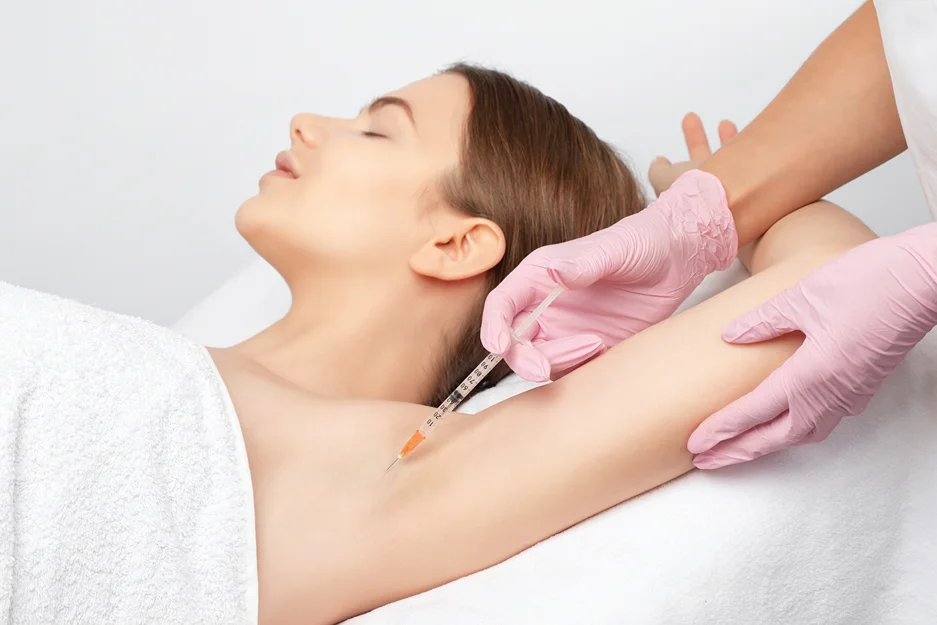
The procedure is minimally invasive and typically performed in a clinical setting. Steps generally include:
- Consultation – Assessment of affected areas and discussion of treatment goals
- Preparation – Cleaning the skin and marking specific injection points
- Injection – Multiple small doses of Botox administered into the targeted sweat glands
- Post-care guidance – Instructions to avoid strenuous activity or excessive heat for 24–48 hours
The entire session usually takes less than an hour, with minimal downtime required.
Benefits of Botox for Sweat Glands
Using Botox for sweat glands provides multiple advantages beyond controlling excessive sweating:
- Rapid and effective reduction in sweat production
- Minimal discomfort during the procedure
- Targeted treatment without affecting overall body function
- Long-lasting results, typically lasting 4–8 months
- Boosted confidence and improved social interactions
Many patients report a noticeable improvement in lifestyle quality and daily comfort after receiving treatment.
Safety and Side Effects
Botox for hyperhidrosis is widely regarded as safe when administered by trained professionals. Possible side effects are generally mild and temporary:
- Minor pain or redness at the injection site
- Slight swelling or bruising
- Temporary muscle weakness near treated areas in rare cases
Most patients resume normal activities immediately after treatment, making it a convenient option for managing excessive sweating.
Who Can Benefit from Botox
Botox for sweat glands is suitable for individuals experiencing:
- Persistent excessive sweating that affects personal or professional life
- Limited response to topical antiperspirants or oral medications
- Desire for a non-surgical, minimally invasive treatment option
A thorough consultation ensures the treatment plan is tailored to the patient’s needs and expectations.
Follow-Up and Maintenance
To maintain results, repeat treatments are usually recommended every 4–8 months. During follow-up visits, clinicians evaluate the effectiveness of previous sessions and adjust injection points or dosage if necessary. Consistent monitoring helps achieve the best long-term outcomes while ensuring safety.
Conclusion
The medical purpose of Botox for sweat glands is to provide targeted, effective relief from hyperhidrosis, significantly improving comfort and quality of life. With professional administration, the procedure offers a safe, minimally invasive solution that addresses excessive sweating at its source. Residents of Dubai seeking Botox for Sweat Glands in Dubai can experience reliable results, allowing them to regain confidence and participate fully in daily activities without the discomfort of uncontrolled sweating